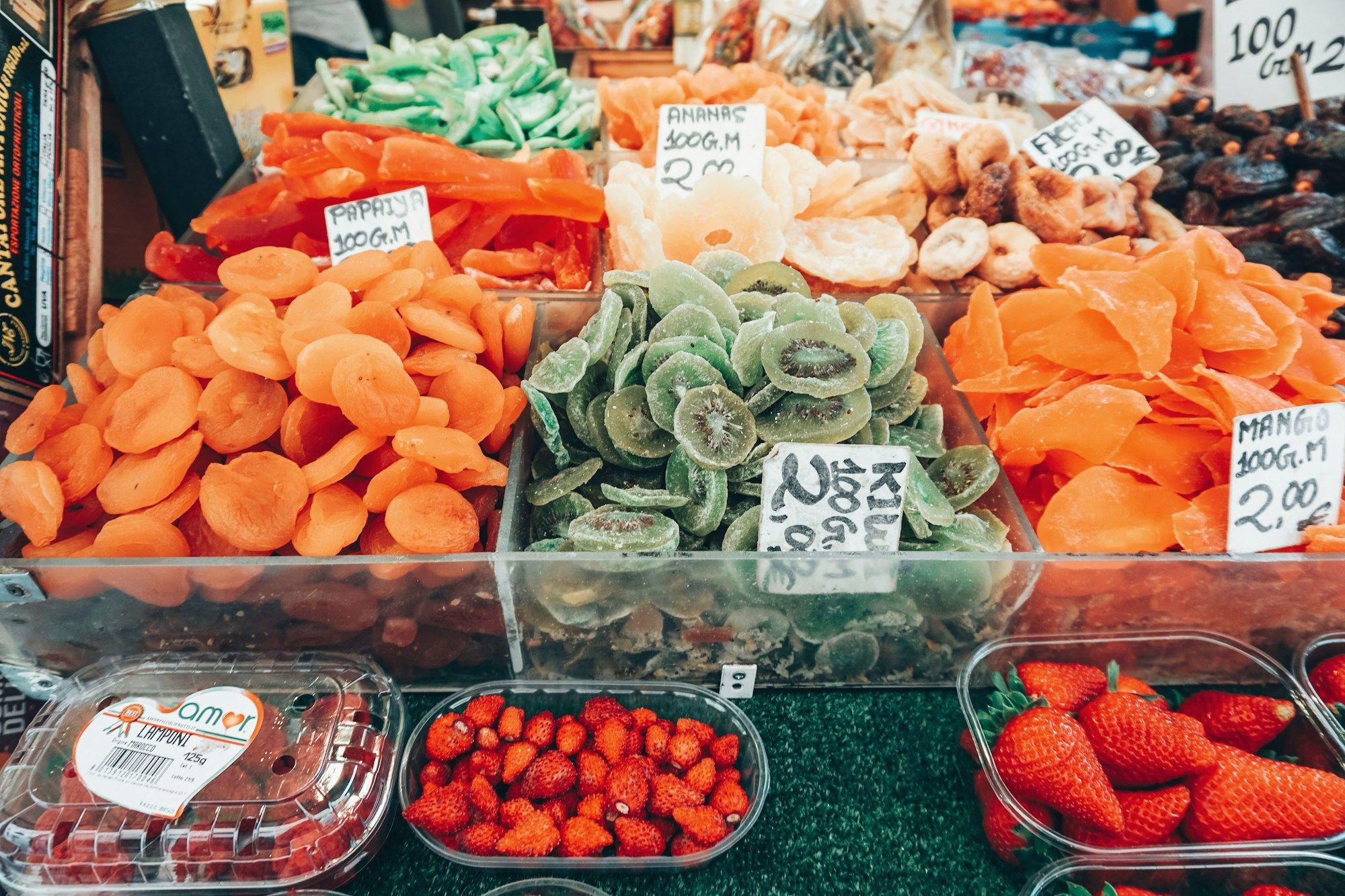
Dried fruit and nuts are one of Uzbekistan's traditional export categories. The climate — hot, dry summers and a long growing season — suits grapes, apricots, plums and tree nuts, and drying is a long-established local practice. For a buyer abroad, the opportunity is real, but so is the variation between suppliers, lots and seasons. This guide covers what to agree on before you commit to a contract.
Main product groups
Supply typically falls into a few groups:
- Raisins — dark and golden types, from different grape varieties and drying methods (sun-dried or shade-dried).
- Dried apricots — whole or pitted, sulphured (bright orange) or unsulphured (darker, "natural").
- Prunes — with or without pits.
- Other dried fruit — such as dried figs, cherries, melon or mulberries, depending on the season and supplier.
- Nuts and kernels — walnuts (in-shell and kernels), almonds, pistachios, as well as apricot kernels.
Availability and the range of grades vary from year to year, so it is worth confirming what a supplier can actually offer from the current crop rather than relying on last season's list.
Specifications to agree in writing
Most disputes in this category come from specifications that were never written down. Before a price is meaningful, agree on:
- Product and grade — variety, colour, processing (washed, oiled, sulphured or not), and the grade name as both sides understand it.
- Moisture content — a maximum percentage; too high shortens shelf life and invites mould.
- Size or calibre — pieces per kilogram or per ounce for fruit, kernel size or count for nuts.
- Defects and foreign matter — tolerances for stems, stones, broken pieces, insect damage and extraneous material.
- Additives — for example sulphur dioxide levels in dried apricots, or vegetable oil on raisins, within the limits of your market.
- Packaging — carton or bag type, net weight, liners, labelling language and pallet configuration.
A reference sample that both sides keep sealed is the best companion to a written specification.
Seasonality and storage
Fresh fruit is harvested from early summer to autumn, and the new crop of dried product typically becomes available from late summer onwards, depending on the item. Nuts follow their own harvest calendar in the autumn.
Dried fruit and nuts are sensitive to heat and humidity. Ask how the product is stored between drying and loading, whether cold storage is used for longer holding periods, and how old the lot is. For shipments that cross hot regions or take longer, ventilated or temperature-controlled transport may be worth discussing.
Documents typically required for export
The exact set depends on the destination market and must be confirmed for each order. Commonly requested documents include:
- Commercial invoice and packing list.
- Phytosanitary certificate issued by the national plant quarantine authority.
- Certificate of origin — in the form your market requires, including a preferential form where a trade agreement or preference scheme applies.
- Laboratory test reports where the buyer's market requires them — for example for aflatoxins in nuts, ochratoxin A in raisins, pesticide residues or sulphite levels.
- Quality or conformity certificates requested by the importer or by the destination authorities.
Some markets also require prior registration of the exporter or importer, or pre-notification of food shipments. Check these rules early, because they cannot be fixed at the border.
From sample to loading
A controlled process usually looks like this:
- Sampling — the supplier sends samples from the actual lot offered, not a showroom sample. You approve one and both sides retain a sealed reference.
- Lab testing — if your market has limits on contaminants, test samples from the lot at an accredited laboratory before the contract is final.
- Lot inspection — before packing or loading, an inspector checks the lot against the specification: moisture, calibre, defects, foreign matter, packaging and labelling, with photos and a written report.
- Loading control — the inspector confirms quantity, carton count, marks and the condition of the container or truck, and records the seal number.
The inspection can be carried out by the buyer's representative, by an independent inspection company, or by a local partner acting on the buyer's instructions.
Common pitfalls
- Price agreed before specification. A low quote often means a different grade.
- Sample from one lot, shipment from another. Insist that the inspected lot is the one loaded.
- Testing too late. A lab result that arrives after loading cannot change what is in the container.
- Ignoring destination rules. Contaminant limits, labelling and import registration differ between markets.
- Underestimating transit conditions. Heat and condensation during long journeys can damage good product.
Send us your specification
If you are planning to buy dried fruit or nuts from Uzbekistan, send us your product list, target grade, volume and destination market through the contact form. We will review the requirements and come back with questions and a realistic plan for samples, documents and inspection.